
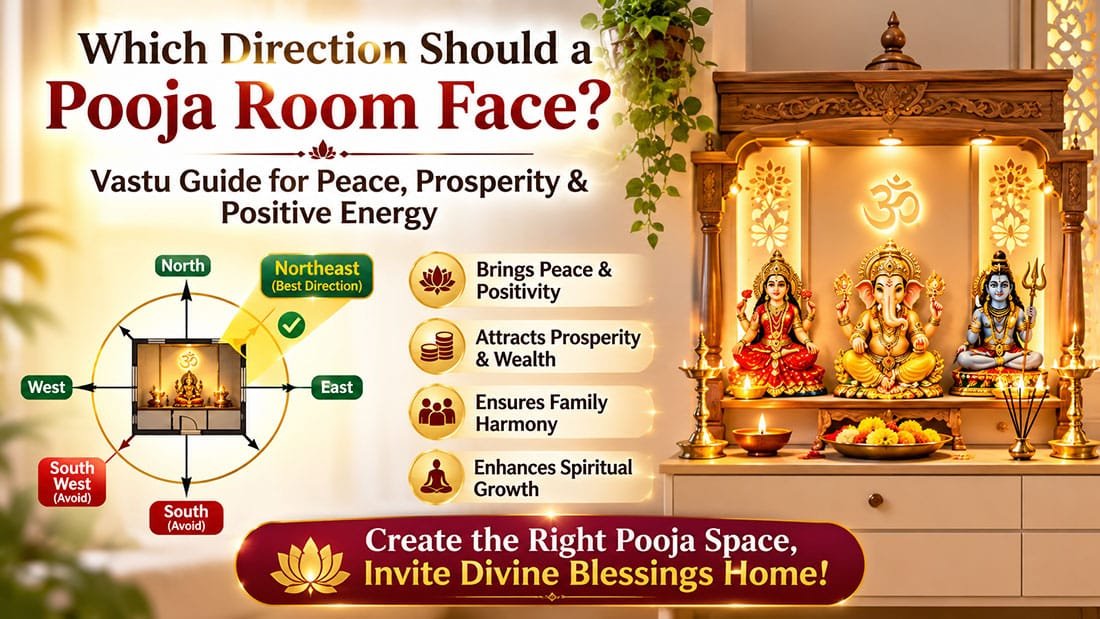
Which Direction Should a Pooja Room Face? A Complete Vastu Guide
The pooja room is considered the most sacred space in an Indian home. It is a place where family members pray, meditate, and connect with divine energy. According to Vastu Shastra, the location and direction of the pooja room significantly influence the flow of positive energy throughout the house.
A properly designed pooja room is believed to attract happiness, peace, prosperity, and spiritual growth. On the other hand, an incorrectly placed temple may disturb the balance of positive energy and reduce the effectiveness of daily prayers.
If you are planning to build a new home, renovate your existing house, or simply relocate your home temple, this guide explains which direction a pooja room should face according to Vastu, along with important placement rules and practical tips.
Why is the Direction of the Pooja Room Important?
Vastu Shastra is an ancient Indian architectural science that focuses on balancing the five natural elements—Earth, Water, Fire, Air, and Space. Every direction is associated with different energies.
The pooja room is believed to be the spiritual center of the house. Placing it in the correct direction allows positive cosmic vibrations to circulate freely, promoting mental peace and overall well-being.
Some of the benefits of a Vastu-compliant pooja room include:
- Positive energy throughout the home
- Mental peace and emotional stability
- Better concentration during prayers
- Harmony among family members
- Financial prosperity
- Spiritual growth
- Improved health and happiness
Best Direction for a Pooja Room According to Vastu
1. North-East (Ishan Corner) – The Most Auspicious Direction
The North-East direction, also known as the Ishan Corner, is universally considered the most favorable location for a pooja room.
This direction is associated with divine energy, wisdom, purity, and spirituality. It receives gentle morning sunlight, which symbolizes positivity and new beginnings.
Benefits of a North-East Pooja Room
- Promotes peace and positivity
- Enhances spiritual vibrations
- Attracts prosperity and abundance
- Improves family relationships
- Encourages meditation and concentration
- Creates a calm atmosphere in the house
If possible, always choose the North-East corner while designing your home’s temple.
Alternative Directions for a Pooja Room
If the North-East corner is unavailable due to space limitations, the following directions are considered acceptable.
East Direction
The East represents the rising sun, knowledge, and new opportunities.
A pooja room in the East is believed to bring:
- Better focus
- Positive thinking
- Success in education
- Improved confidence
- Spiritual awakening
North Direction
The North is associated with prosperity and wealth.
A pooja room in this direction is believed to support:
- Financial growth
- Career success
- Business stability
- Positive opportunities
Directions to Avoid for a Pooja Room
Certain directions are generally considered unsuitable according to Vastu principles.
South Direction
The South direction is not recommended for a pooja room because it is traditionally associated with heavier energies.
South-West Corner
Avoid placing the temple in the South-West corner, as this area is better suited for the master bedroom.
Under the Staircase
A temple should never be placed beneath a staircase, as it is considered disrespectful to the sacred space and restricts positive energy.
Adjacent to Bathrooms
Avoid constructing a pooja room next to or directly above or below a bathroom whenever possible.
Which Direction Should You Face While Praying?
According to Vastu Shastra, devotees should ideally face:
- East while praying (most recommended)
- North (also considered auspicious)
Facing these directions is believed to improve concentration and spiritual connection.
Placement of Idols and Pictures
Proper idol placement is equally important.
Follow these simple guidelines:
- Keep idols slightly away from the wall.
- Place deities so that worshippers face East while praying.
- Avoid keeping damaged or broken idols.
- Avoid overcrowding the temple with too many idols.
- Keep the temple neat and organized.
Ideal Colors for a Pooja Room
Soft, soothing colors create a peaceful spiritual environment.
Recommended colors include:
- White
- Light Yellow
- Cream
- Light Beige
- Soft Peach
- Light Sky Blue
Avoid very dark shades such as black or dark grey inside the prayer room.
Best Materials for a Home Temple
Wood is traditionally considered the best material for home temples because it symbolizes warmth and purity.
Popular choices include:
- Teak wood
- Sheesham wood
- Oak finish
- Solid natural wood
Marble flooring also creates a clean and elegant prayer space.
Vastu Tips for Small Apartments
Modern apartments often have limited space. If you cannot dedicate an entire room, you can still follow Vastu guidelines.
- Install a compact wooden temple in the North-East corner.
- Keep the area clean and clutter-free.
- Ensure proper lighting.
- Avoid placing the temple directly above storage cabinets.
- Maintain daily worship and cleanliness.
Even a small prayer corner can become spiritually uplifting when maintained properly.
Common Vastu Mistakes to Avoid
Many homeowners unknowingly make mistakes while setting up a pooja room.
Avoid the following:
- Keeping broken idols
- Storing unnecessary items inside the temple
- Placing the pooja room beside a toilet
- Positioning the temple under a staircase
- Using the pooja room as a storage area
- Keeping shoes near the temple
- Allowing dust to accumulate
Maintaining cleanliness is one of the simplest ways to preserve positive energy.
Daily Practices for a Positive Pooja Room
To enhance the spiritual atmosphere:
- Light a ghee lamp every morning and evening.
- Offer fresh flowers regularly.
- Burn incense or natural fragrance.
- Chant prayers with devotion.
- Keep the space well-ventilated.
- Replace old flowers daily.
- Clean idols and the altar regularly.
Consistency in worship is considered more important than elaborate rituals.
Benefits of Following Vastu for the Pooja Room
A Vastu-compliant pooja room is believed to offer numerous benefits:
- Greater peace of mind
- Increased positivity
- Better family harmony
- Spiritual progress
- Enhanced focus and meditation
- Financial stability
- Improved emotional well-being
- A calm and sacred home environment
While these benefits are rooted in traditional Vastu beliefs, many people also find that maintaining a dedicated, clean, and peaceful prayer space supports mindfulness and daily well-being.
Frequently Asked Questions
Which direction is best for a pooja room?
The North-East (Ishan Corner) is considered the most auspicious direction according to Vastu Shastra.
Can I keep a temple in my bedroom?
If space constraints make it necessary, a small, clean temple may be kept respectfully, but a separate pooja area is generally preferred.
Which direction should I face while praying?
Facing East is ideal, while North is also considered favorable.
Can I keep broken idols in the pooja room?
No. Broken or damaged idols should be respectfully removed and replaced.
Is a wooden temple better than a metal one?
Wooden temples are traditionally preferred in Vastu because they are associated with warmth, natural energy, and purity.
Conclusion
The North-East direction remains the most recommended location for a pooja room according to Vastu Shastra. If that is not possible, the East or North can also be suitable alternatives. Equally important are cleanliness, proper idol placement, regular prayers, and maintaining a peaceful atmosphere.
Whether your home is large or compact, creating a dedicated and respectful prayer space can encourage calmness, mindfulness, and a positive environment for the entire family. By following these traditional Vastu principles, you can design a pooja room that reflects both spiritual values and practical living.
For personalized guidance, consult our Astrologer in Dubai for detailed Vastu analysis.