
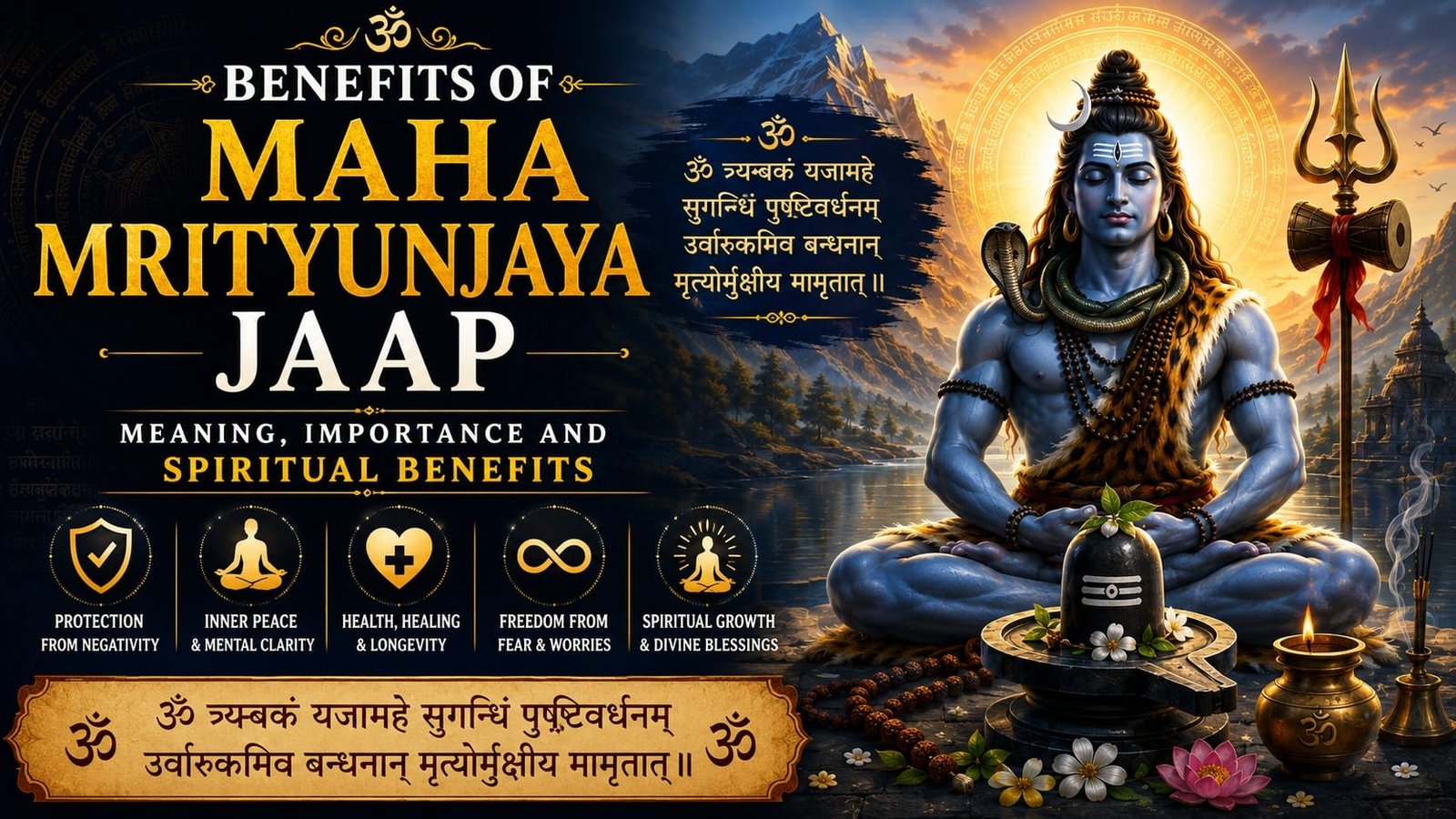
The Maha Mrityunjaya Jaap, also known as the Maha Mrityunjaya Mantra, is one of the most revered Vedic mantras dedicated to Lord Shiva. It is traditionally associated with protection, spiritual strength, inner peace, and overcoming fear. Many devotees recite this powerful mantra as part of their daily spiritual practice or perform a special jaap (repetition) during challenging periods of life.
The mantra is found in the ancient Rigveda and is also mentioned in the Yajurveda. Because of its deep spiritual significance, it has been an important part of Hindu traditions for centuries.
What Is the Maha Mrityunjaya Mantra?
The Maha Mrityunjaya Mantra is traditionally recited as:
“Om Tryambakam Yajamahe
Sugandhim Pushtivardhanam
Urvarukamiva Bandhanan
Mrityor Mukshiya Maamritat.”
The mantra is dedicated to Lord Shiva, who is worshipped as Tryambaka, the three-eyed divine form. The mantra expresses a prayer for liberation from fear, suffering, and worldly limitations and for spiritual well-being.
The word “Mrityunjaya” means “the one who conquers death.” However, this should not be interpreted as a guarantee of physical immortality. Traditionally, the mantra is understood as a spiritual prayer for protection, courage, healing, longevity, and liberation from fear.
Major Benefits of Maha Mrityunjaya Jaap
1. Promotes Inner Peace
Regular chanting can become a calming spiritual practice. Repeating the mantra with concentration may help the mind become more focused and peaceful.
When the mind is continuously occupied with worries, fear, or negative thoughts, meditation and mantra chanting can provide a structured way to redirect attention toward spirituality.
2. Helps Reduce Fear and Anxiety
The Maha Mrityunjaya Mantra is traditionally associated with protection from fear. Devotees often recite it during difficult or uncertain periods of life.
The repetitive rhythm of chanting can encourage relaxation and mindfulness, helping a person develop greater emotional stability and confidence.
3. Provides Spiritual Protection
In Vedic spiritual traditions, Maha Mrityunjaya Jaap is considered a powerful protective practice. It is commonly performed when someone feels surrounded by negativity, uncertainty, or difficult circumstances.
Many families also arrange special jaap or puja for the well-being and protection of their loved ones.
4. Supports Positive Thinking
Regular spiritual practice can influence one’s mindset. Maha Mrityunjaya Jaap encourages concentration, devotion, and surrender to the divine.
With consistent practice, devotees may feel more optimistic, disciplined, and spiritually connected.
5. Encourages Mental Focus
Mantra chanting requires attention to pronunciation, rhythm, and repetition. This can make it a useful form of concentration practice.
Whether performed in the morning, evening, or during meditation, focused chanting can help reduce distractions and create a peaceful mental environment.
6. Associated With Longevity and Well-Being
One of the traditional purposes of the Maha Mrityunjaya Mantra is to pray for long life, health, and well-being. It is frequently recited as a prayer for someone facing a difficult phase or recovering from an illness.
It is important to understand that spiritual practices should complement, not replace, professional medical care. The mantra is a religious and spiritual practice rather than a medical treatment.
7. Helps During Difficult Life Phases
Many people turn toward spiritual practices when facing challenges related to family, career, relationships, finances, or personal uncertainty.
Maha Mrityunjaya Jaap can provide a sense of discipline, faith, and emotional support during such periods. The practice may help a person approach problems with greater patience and a calmer mind.
8. Creates a Devotional Connection With Lord Shiva
For Shiva devotees, chanting the Maha Mrityunjaya Mantra is more than simply repeating words. It is an expression of devotion and surrender.
Regular jaap can strengthen one’s connection with Lord Shiva and encourage spiritual reflection, humility, and faith.
When Should Maha Mrityunjaya Jaap Be Performed?
There is no single universally required time for chanting the mantra. Many devotees prefer to perform jaap during the early morning hours, especially after bathing and completing their daily purification rituals.
It may also be performed during meditation, Shiva puja, Pradosh, Mondays, or other spiritually significant occasions.
For specific religious purposes, some devotees choose to perform a prescribed number of mantra repetitions under the guidance of a knowledgeable Vedic priest or spiritual practitioner.
How to Perform Maha Mrityunjaya Jaap
A simple traditional approach can include:
- Take a bath and wear clean clothes.
- Sit in a clean and peaceful place.
- Keep an image or idol of Lord Shiva if desired.
- Light a diya and offer water or other traditional offerings.
- Sit comfortably and calm the mind.
- Chant the Maha Mrityunjaya Mantra with proper pronunciation and concentration.
- Use a Rudraksha mala if you wish to count repetitions.
- Complete the jaap with a prayer for peace, health, protection, and spiritual well-being.
For elaborate rituals, the procedure may include Sankalp, Shiva Puja, Abhishek, Havan, and specific mantra counts, depending on the purpose and tradition being followed.
Why Proper Pronunciation Matters
Sanskrit mantras have a traditional pronunciation and rhythm. For this reason, beginners may benefit from learning the mantra from a qualified teacher, priest, or experienced practitioner.
The intention, devotion, concentration, and consistency of the practitioner are also important aspects of spiritual practice.
Maha Mrityunjaya Jaap for Peace and Protection
Maha Mrityunjaya Jaap has remained an important part of Hindu spiritual traditions because of its association with Lord Shiva, courage, protection, longevity, and liberation from fear.
Whether practiced individually or as part of a traditional puja, the mantra can become a meaningful spiritual discipline. Its repetitive chanting may encourage mindfulness and inner calm, while its devotional meaning can strengthen faith during challenging circumstances.
However, spiritual practices should always be approached with realistic expectations. Maha Mrityunjaya Jaap is not a substitute for medical treatment, professional counselling, or practical action when these are needed.
Conclusion
The Maha Mrityunjaya Mantra is one of the most respected Shiva mantras in the Vedic tradition. Its spiritual significance is connected with protection, courage, peace, longevity, devotion, and freedom from fear.
Regular chanting with faith and concentration can become a powerful part of a person’s spiritual routine. For special circumstances, a properly guided Maha Mrityunjaya Jaap, Shiva Puja, or Havan can be performed according to traditional Vedic procedures.
If you are considering a personalized spiritual or Vedic ritual, consult an experienced practitioner who can understand your specific purpose and recommend an appropriate traditional procedure.