
Introduction
Navratri is one of the most important Hindu festivals dedicated to Goddess Durga, the divine embodiment of feminine power, courage, wisdom, and protection. The word Navratri comes from two Sanskrit words: “Nav,” meaning nine, and “Ratri,” meaning night. This nine-night festival celebrates the victory of good over evil and the spiritual power of the Divine Mother.
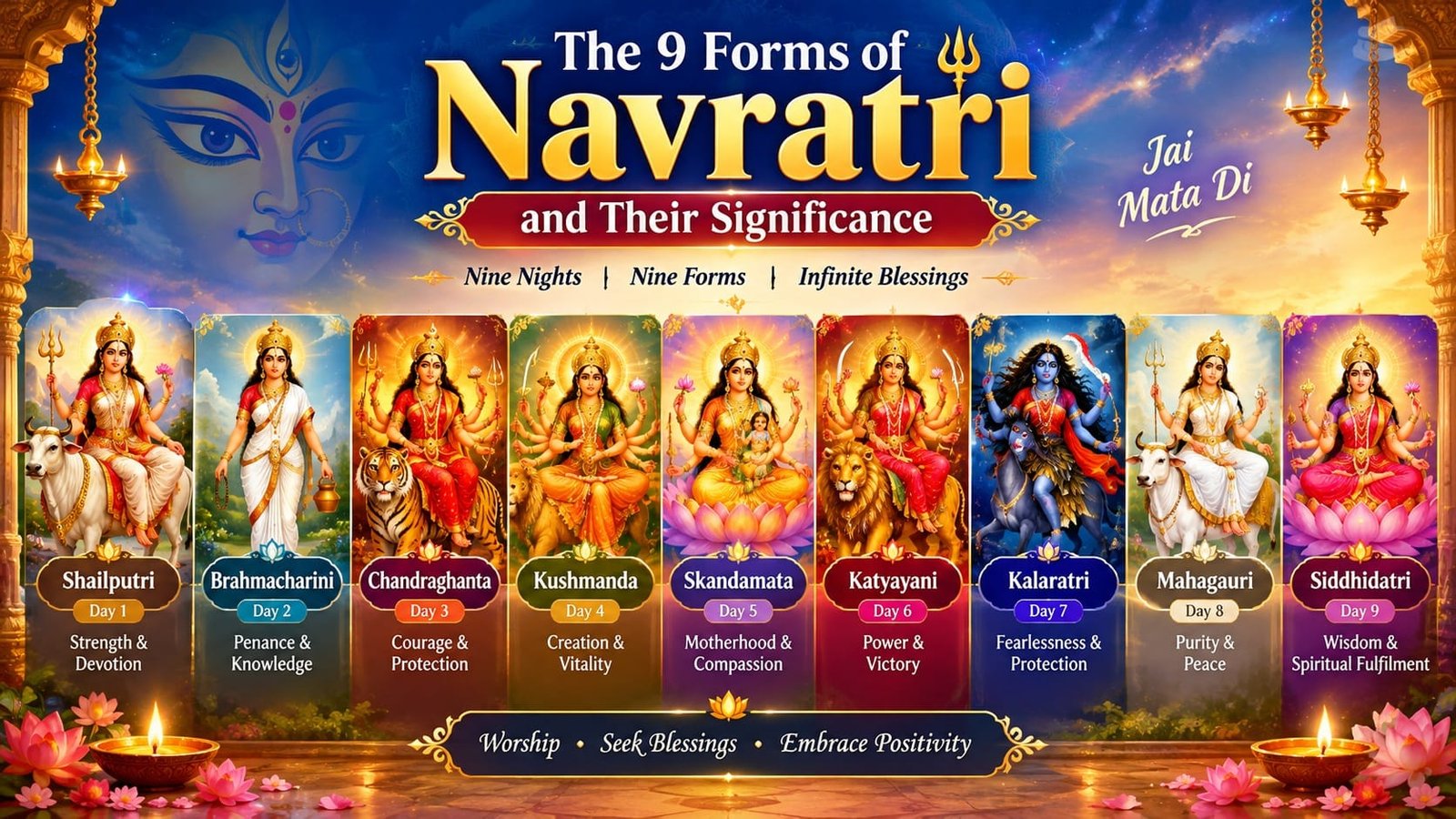
During Navratri, devotees worship the nine forms of Goddess Durga, collectively known as Navdurga. Each form represents a unique quality, spiritual lesson, and aspect of divine energy. From the devotion of Shailputri to the spiritual perfection of Siddhidatri, these nine manifestations guide devotees toward faith, inner strength, peace, and prosperity.
Understanding the nine forms of Navratri and their significance helps devotees appreciate the deeper spiritual meaning behind the rituals and celebrations.
What Are the Nine Forms of Goddess Durga?
The nine forms of Goddess Durga are worshipped on the nine days of Navratri. Each day is associated with a particular manifestation of the Goddess and represents a different stage of spiritual development.
1. Goddess Shailputri – The Symbol of Strength and Devotion
Goddess Shailputri is worshipped on the first day of Navratri. The name “Shailputri” means the daughter of the mountains. She is considered an incarnation of Goddess Parvati and is traditionally depicted riding a bull while holding a trident and a lotus.
Significance of Shailputri:
Goddess Shailputri represents strength, stability, purity, and devotion. Her worship reminds devotees to remain grounded in their values and maintain faith during difficult times.
Devotees pray to her for courage, emotional balance, and a strong foundation for spiritual growth. The first day of Navratri symbolizes beginning a journey with determination and a positive mindset.
2. Goddess Brahmacharini – The Symbol of Penance and Knowledge
Goddess Brahmacharini is worshipped on the second day of Navratri. She represents devotion, discipline, meditation, and the pursuit of spiritual knowledge. She is usually depicted holding a rosary and a water pot.
Significance of Brahmacharini:
Her form teaches the importance of patience, self-control, dedication, and perseverance. According to Hindu tradition, Goddess Brahmacharini performed intense penance to attain Lord Shiva as her husband.
Devotees worship her to cultivate inner peace, strengthen their determination, and develop the discipline needed to overcome challenges. Her message is that sincere effort and unwavering faith are essential for personal and spiritual development.
3. Goddess Chandraghanta – The Symbol of Courage and Protection
Goddess Chandraghanta is worshipped on the third day of Navratri. Her name comes from the crescent-shaped bell associated with her forehead. She is depicted riding a tiger or lion and is known for her powerful and protective form.
Significance of Chandraghanta:
Goddess Chandraghanta symbolizes courage, bravery, alertness, and protection from negative forces. Her fierce appearance represents the power to confront injustice and overcome fear.
Devotees seek her blessings for confidence, peace, and the strength to face difficult situations. Her worship reminds people that courage and compassion can work together to protect what is right.
4. Goddess Kushmanda – The Creator of the Universe
Goddess Kushmanda is worshipped on the fourth day of Navratri. According to Hindu belief, she is associated with the creation of the universe through her divine smile. Her name is traditionally connected with cosmic energy and the universe.
Significance of Kushmanda:
Kushmanda represents creation, vitality, health, and positive energy. She is associated with the power that sustains life and brings light into darkness.
Devotees worship her for happiness, strength, prosperity, and well-being. Her form encourages people to nurture optimism, recognize the creative power within themselves, and approach life’s challenges with hope.
5. Goddess Skandamata – The Symbol of Motherhood and Compassion
Goddess Skandamata is worshipped on the fifth day of Navratri. She is the mother of Lord Skanda, also known as Kartikeya, the Hindu deity associated with divine warfare. She is commonly depicted holding her son while seated on a lotus.
Significance of Skandamata:
Skandamata represents maternal love, compassion, kindness, and protection. Her form highlights the importance of family, nurturing relationships, and caring for others.
Devotees pray to her for family harmony, wisdom, and emotional strength. Her worship reminds us that unconditional love and compassion are powerful forces that help build peaceful homes and communities.
6. Goddess Katyayani – The Symbol of Power and Victory
Goddess Katyayani is worshipped on the sixth day of Navratri. She is a fierce manifestation of Goddess Durga associated with the destruction of evil and the restoration of righteousness. She is often depicted riding a lion and carrying weapons.
Significance of Katyayani:
Goddess Katyayani symbolizes courage, justice, determination, and victory over negative forces. Hindu traditions associate her with the defeat of the demon Mahishasura.
Devotees worship her for strength, confidence, and the ability to overcome obstacles. She is also traditionally associated with prayers for a suitable life partner and marital happiness.
Her message is to stand firmly against injustice and act with courage and integrity.
7. Goddess Kalaratri – The Symbol of Fearlessness
Goddess Kalaratri is worshipped on the seventh day of Navratri. She is one of the fiercest forms of Goddess Durga, depicted with a dark complexion, dishevelled hair, and a powerful appearance.
Significance of Kalaratri:
Despite her fearsome form, Goddess Kalaratri is regarded as a protective and benevolent mother who removes fear and destroys evil. She symbolizes the courage needed to confront darkness, ignorance, and destructive tendencies.
Devotees pray to her for protection, fearlessness, and inner strength. Her worship teaches that difficult experiences can become opportunities for transformation and that truth and courage help people face uncertainty.
8. Goddess Mahagauri – The Symbol of Purity and Peace
Goddess Mahagauri is worshipped on the eighth day of Navratri, known as Ashtami. She is generally depicted wearing white clothing and riding a bull. Her name represents radiance, purity, and serenity.
Significance of Mahagauri:
Mahagauri symbolizes peace, forgiveness, purity, and spiritual renewal. Her form represents the possibility of overcoming past difficulties and moving forward with a clear mind and positive intentions.
Devotees worship her for harmony, well-being, and peace in family life. In many traditions, Kanya Puja, the worship of young girls as manifestations of the Divine Feminine, is performed on Ashtami or Navami.
Her message encourages forgiveness, kindness, and a fresh beginning.
9. Goddess Siddhidatri – The Symbol of Spiritual Accomplishment
Goddess Siddhidatri is worshipped on the ninth day of Navratri, known as Navami. Her name means the giver of siddhis, or spiritual accomplishments and supernatural abilities described in Hindu traditions. She is usually depicted seated on a lotus or riding a lion.
Significance of Siddhidatri:
Siddhidatri represents wisdom, spiritual fulfilment, divine grace, and the completion of the spiritual journey. She is associated with the attainment of higher knowledge and the development of spiritual understanding.
Devotees seek her blessings for clarity, devotion, and progress on their spiritual path. Her worship symbolizes the culmination of the nine-day journey, encouraging individuals to combine knowledge, humility, and faith in everyday life.
Spiritual Significance of the Nine Days of Navratri
The nine forms of Goddess Durga represent more than individual manifestations of divine power. Together, they symbolize a journey of spiritual growth.
Each day encourages devotees to develop qualities such as strength, discipline, courage, creativity, compassion, determination, fearlessness, purity, and wisdom.
Navratri is celebrated through fasting, prayers, devotional songs, meditation, temple visits, and traditional rituals. In different regions of India, celebrations include Garba, Dandiya Raas, Durga Puja, and Kanya Puja.
Although customs vary by region and family tradition, the central message remains the same: faith, righteousness, self-discipline, and respect for the Divine Feminine.
How to Worship the Nine Forms of Durga During Navratri
Devotees can observe Navratri according to their beliefs, health, and family traditions. Common practices include:
- Performing daily prayers: Worship the form of Goddess Durga associated with each day.
- Lighting a diya: Offer a lamp in a clean prayer area as a symbol of devotion and spiritual light.
- Chanting mantras: Recite Durga mantras or devotional prayers with concentration and respect.
- Practising self-discipline: Observe fasting if appropriate for your health and circumstances.
- Performing charitable acts: Donate food, clothes, or other essentials to people in need.
- Maintaining positive intentions: Practise kindness, honesty, patience, and respect for others.
There is no single way to celebrate Navratri that applies to every devotee. Sincere devotion and respectful observance are central to the festival.
Conclusion
The nine forms of Navratri—Shailputri, Brahmacharini, Chandraghanta, Kushmanda, Skandamata, Katyayani, Kalaratri, Mahagauri, and Siddhidatri—represent the many dimensions of Goddess Durga’s divine energy.
Each form offers a valuable lesson for everyday life, from developing courage and discipline to practising compassion and seeking spiritual wisdom. By understanding the significance of Navdurga, devotees can make Navratri a meaningful occasion for prayer, self-reflection, personal growth, and renewed faith.
The deeper message of Navratri is that divine strength is not only celebrated through rituals but also expressed through righteous actions, kindness, courage, and the determination to overcome negativity.
May Goddess Durga bless everyone with strength, peace, wisdom, prosperity, and spiritual well-being.
Jai Mata Di!